
Concrete Contractors in Mesa, AZ
Mesa is one of the largest cities in Arizona and a lot of it was built decades ago, which shapes the kind of concrete work we do there. Where newer suburbs call for fresh pours, much of Mesa calls for repair, replacement and reworking surfaces that have already served a long life.
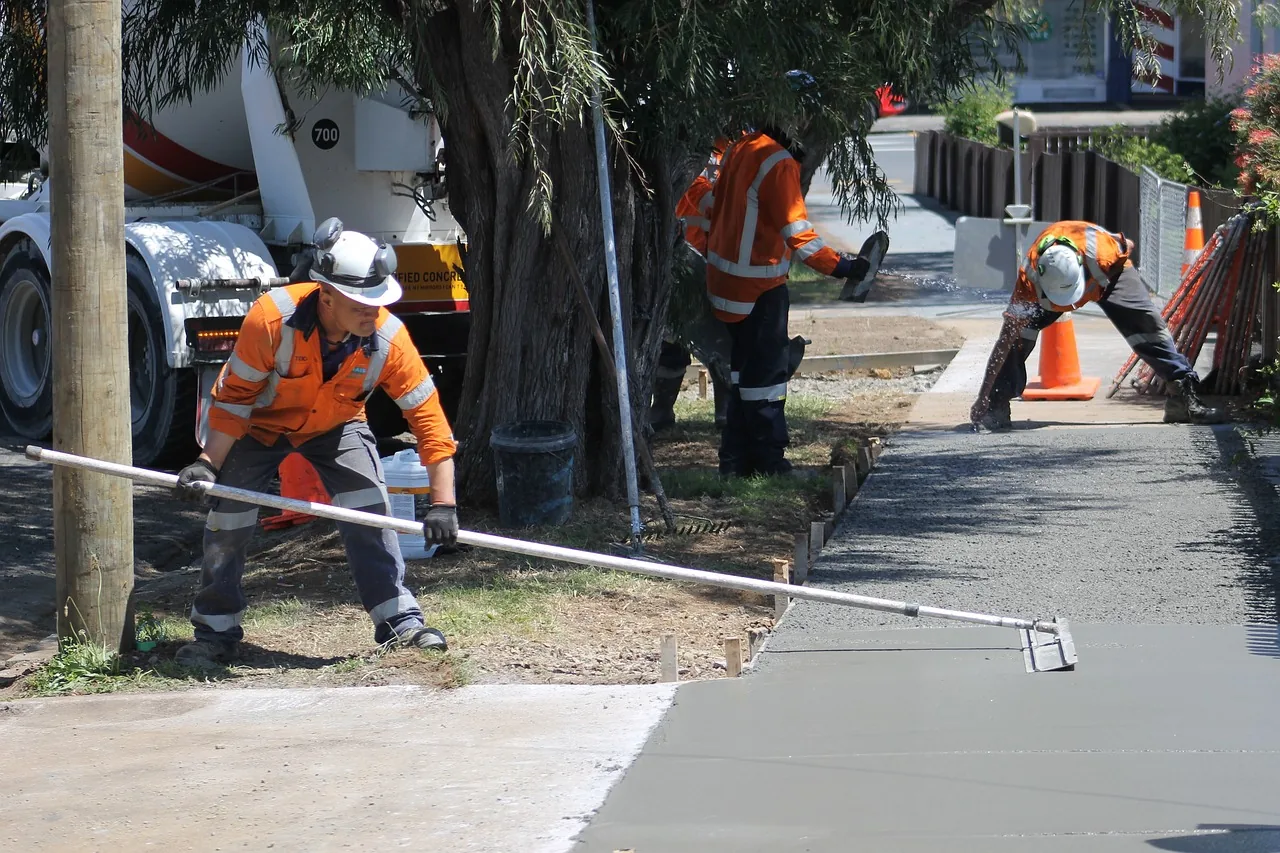
Older Housing Stock Means Repair Work
Large parts of Mesa — the areas around Dobson Ranch, the neighborhoods surrounding Main Street, much of west and central Mesa — went in during the post-war decades through the 1980s. Concrete from that era is often still structurally fine, but it has moved. Driveways settle at the apron. Walkways lift where roots got underneath. Slabs crack along lines nobody cut.
Not all of that needs tearing out. Some of it genuinely does. A hairline crack in an otherwise sound slab is a different problem from a driveway that has broken into sections and is settling at different rates, and the honest answer is sometimes repair and sometimes replacement. We will tell you which one you are looking at, including when the cheaper option is the right one.
RV Pads, Extended Driveways and Side Gates
Mesa lots tend to be generous, and RV ownership is common here in a way it is not everywhere. A large share of what we pour in Mesa is not the main driveway at all — it is a pad down the side of the house, a widened approach to an RV gate, or a reinforced slab meant to carry far more weight than a car.
That is a different pour. A pad holding a loaded motorhome needs more thickness, appropriate reinforcement and a properly compacted base, because the load is heavy, concentrated and parked in the same spot for months. Pouring it to ordinary driveway spec is how you end up with cracking under the wheels within a few seasons.
East Mesa and Newer Construction
East Mesa is a different picture. Areas out toward Las Sendas, Superstition Springs and the newer master-planned development around Eastmark have far more recent housing, and the work skews toward adding rather than fixing — extending a patio, putting in a walkway that the builder never ran, pouring a slab for a shop or a shade structure.
Newer does not automatically mean simpler. Builder-grade patios are frequently poured to the minimum the plan required, and homeowners want more than that once they have lived with it for a few summers. Tying new concrete to existing concrete cleanly — matching elevation, placing the joint sensibly, getting the drainage right — is most of the skill in that job.
Drainage and the Monsoon
Phoenix-area monsoon storms between roughly July and September can drop a lot of water very quickly. Flat, hard surfaces are exactly where that becomes a problem, and Mesa's larger lots often mean larger uninterrupted expanses of concrete.
Slope is not a detail to leave to chance. Every slab we pour is placed to move water somewhere sensible and away from the house. On a big pad or a long driveway that sometimes means planning the fall across the whole surface before any concrete arrives, not adjusting at the end.
Concrete Services We Offer in Mesa
Every service below is available throughout Mesa and the surrounding East Valley. If you are not sure which one your project falls under, describe it and we will point you in the right direction.
Areas of Mesa We Cover
We work across Mesa and the neighbouring communities, including:
- Dobson Ranch
- Las Sendas
- Eastmark
- Superstition Springs
- Red Mountain
- Downtown Mesa
- East Mesa
- West Mesa
Common Questions from Mesa Homeowners
Can you repair my cracked driveway instead of replacing it?
Sometimes. It depends on whether the slab is still sound and how much movement there has been. We will look at it and tell you honestly — including when repair is the sensible call rather than a full replacement.
Do you pour RV pads?
Yes, and they are common in Mesa. An RV pad needs more thickness and reinforcement than a standard driveway because of the concentrated weight, so we spec it accordingly rather than treating it as ordinary flatwork.
How long before I can park on a new driveway?
Concrete gains strength over time rather than all at once. We will give you specific guidance for your pour and the conditions it went in under — waiting the recommended period before putting vehicle weight on it matters.
Get a Free Concrete Quote in Mesa
Tell us what you are planning and we will give you a straight answer on what it involves and what it will cost. No charge for the estimate.